Fault-tolerant-trained MARL
Transient sensor noise evaluation
Duration: Transient
Recovery mechanism: Fault-tolerant-trained MARL
Experiment definition
The experiment evaluates Fault-tolerant-trained MARL under a transient sensor noise injection. Fault onset is randomized between environment steps 40 and 60.
Expected evaluation record
| Metric | Recorded value |
|---|---|
| Degradation-area | 4.14 ± 1.76 (corrected; mean ± 95% CI, n=72) |
| Safety-violation excess | 16.2 ± 8.1 (weighted, control-subtracted; mean ± 95% CI, n=72) |
| Fraction of time healthy | 0.669 ± 0.017 (mean ± 95% CI, n=72) |
| Relapse count | 0.75 ± 0.16 (mean ± 95% CI, n=72) |
| False-recovery rate | n/a - no fault detector (trained policy only) |
| Intervention recall | n/a - no fault detector (trained policy only) |
Values are means with 95% confidence intervals across every target × duration-fixed combination shown on this page (see graphs below), 8 evaluation seeds each, for each of 3 training seeds. See the Results page for the cross-mechanism comparison.
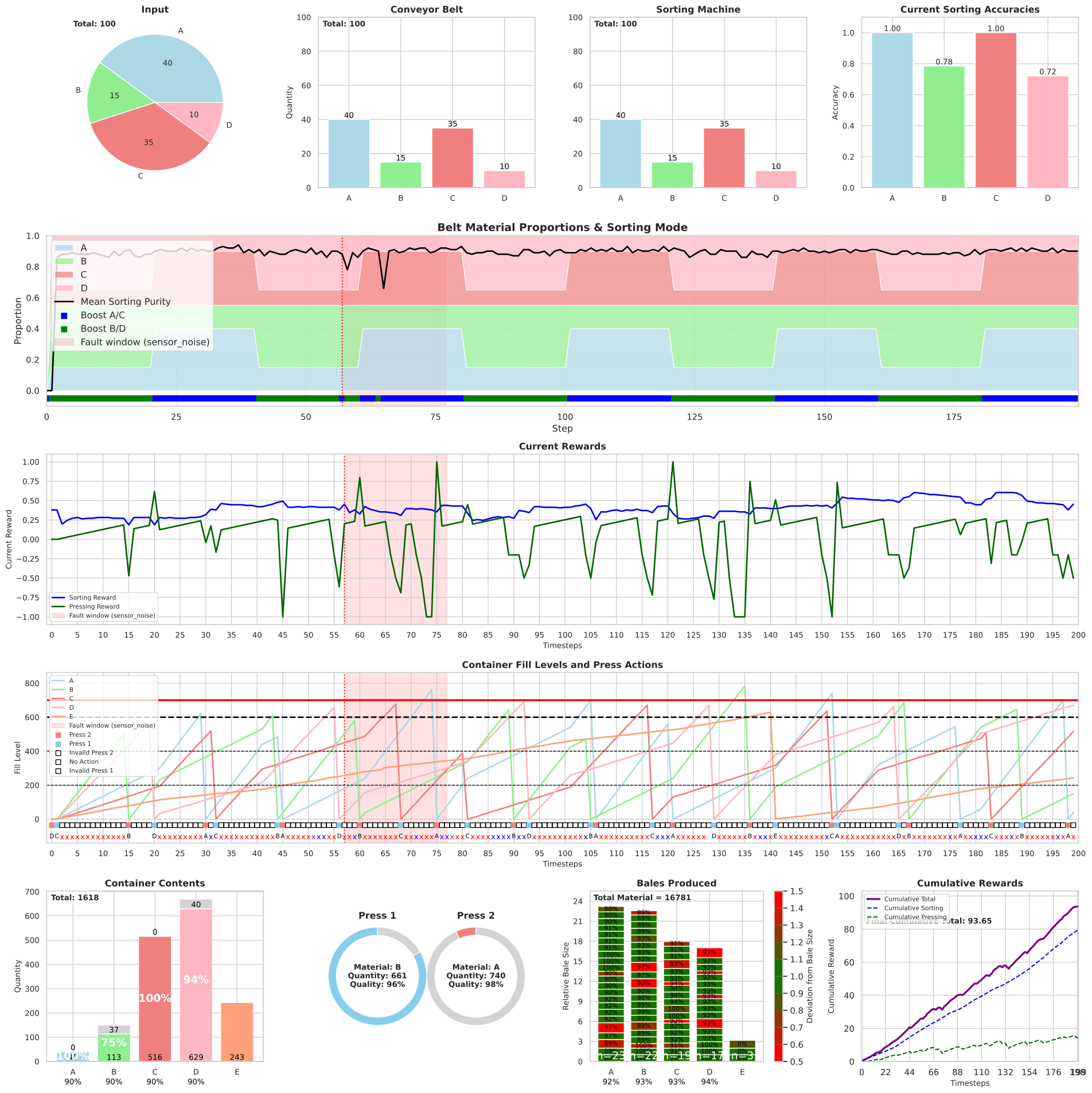
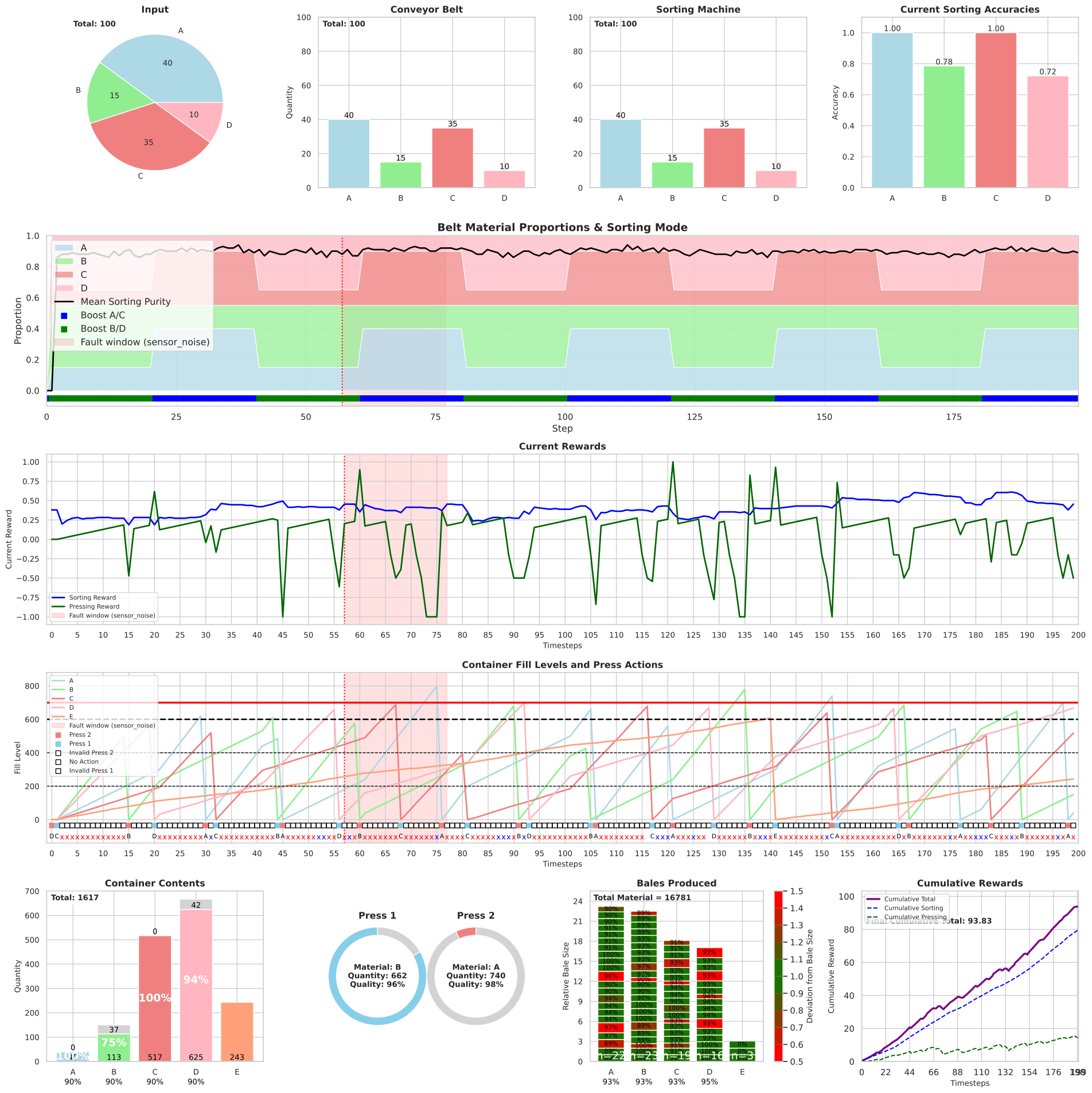
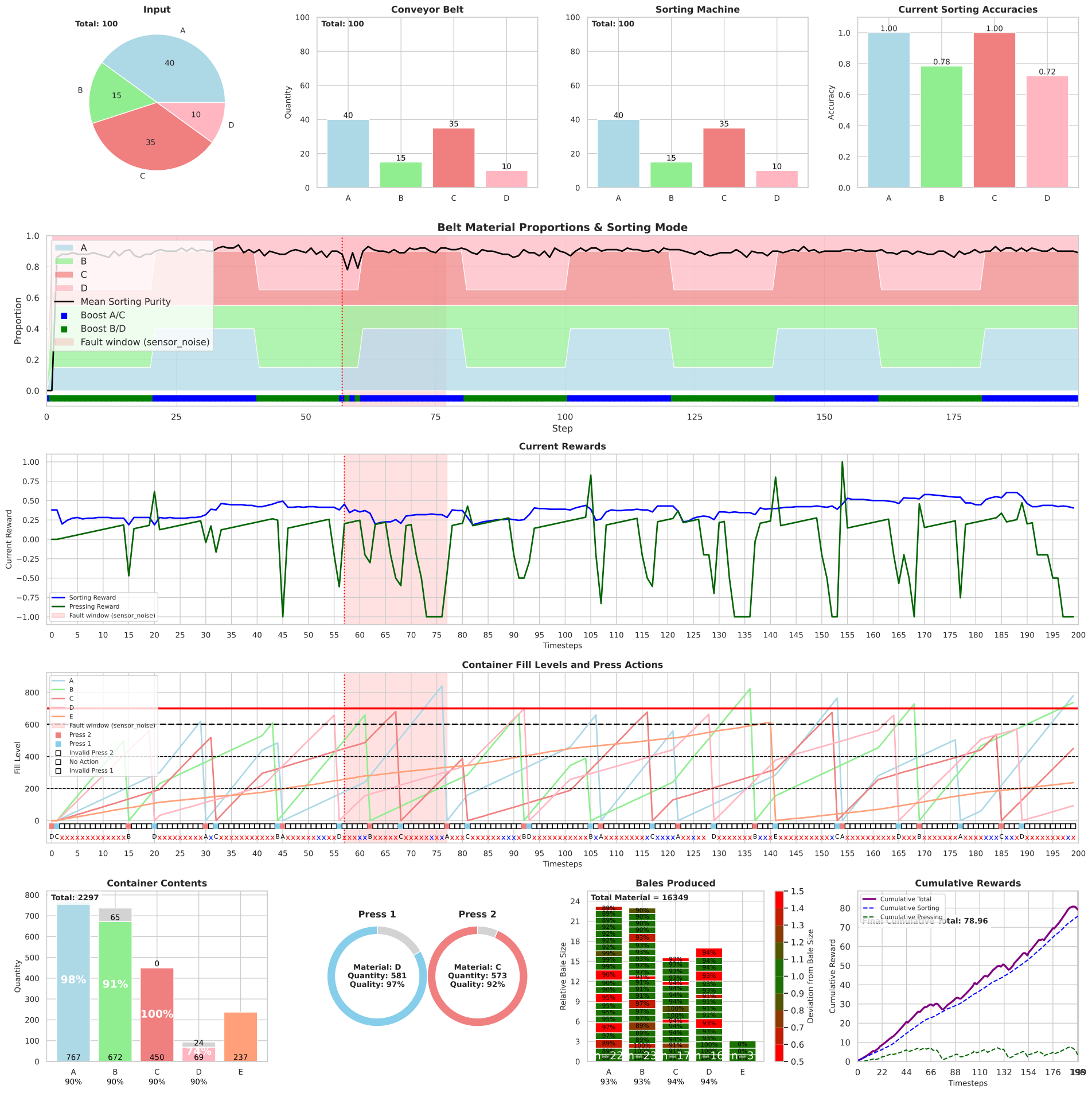
Experimental trajectory graphs
One representative run (evaluation seed 0 of 8, training seed 1 of 3) per target combination from the full sweep. See the Results page for the multi-seed aggregate comparison across mechanisms. The graphs for every seed are archived at doi:10.5281/zenodo.23304785 (files available from 10 November 2026).
Sorting Agent Target
Pressing Agent Target
Both Agents Target
Notes
This page is intentionally separated from the paper-facing results so that full-resolution plots, additional seeds, and diagnostic figures can be documented without overloading the publication.