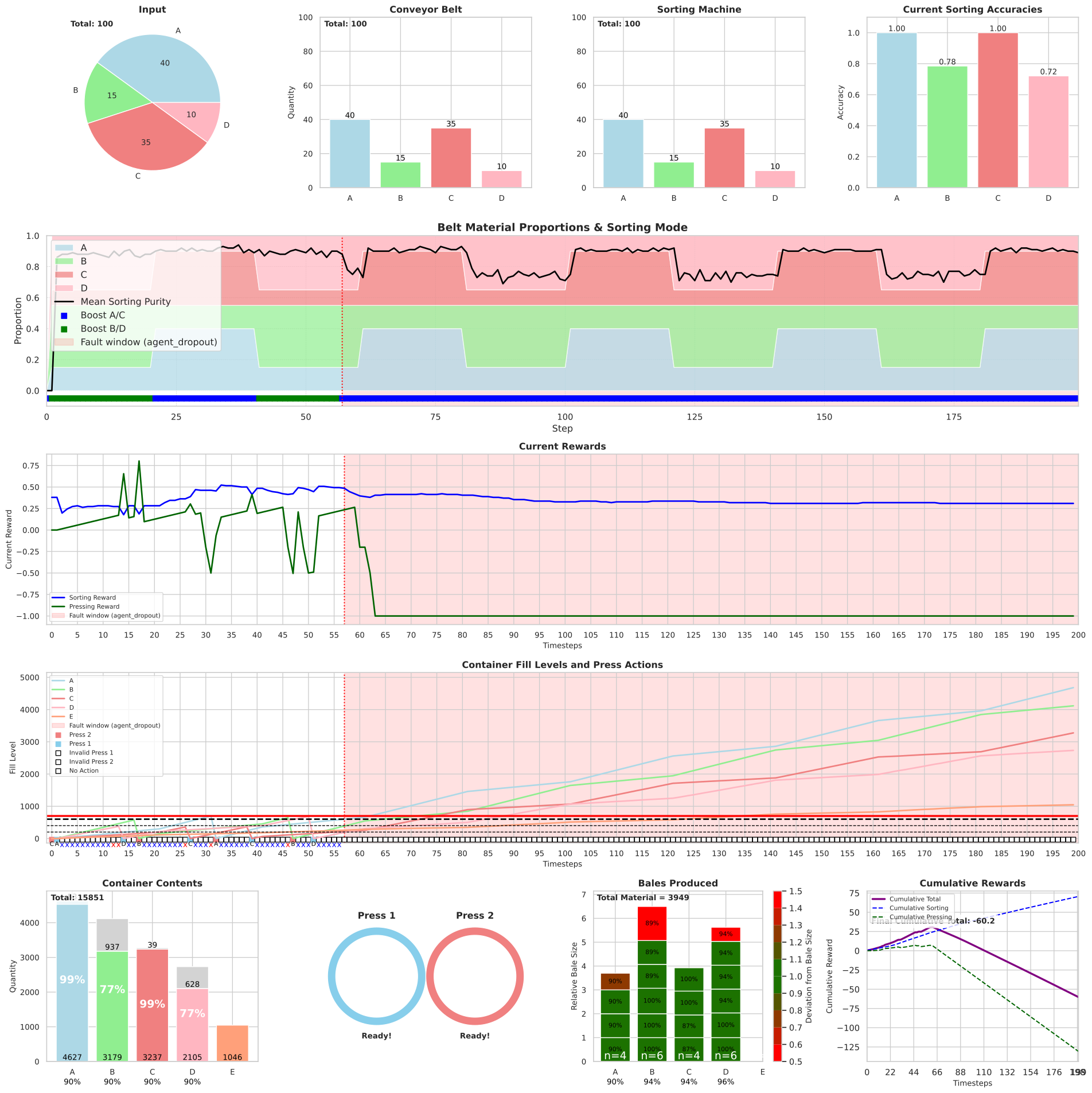
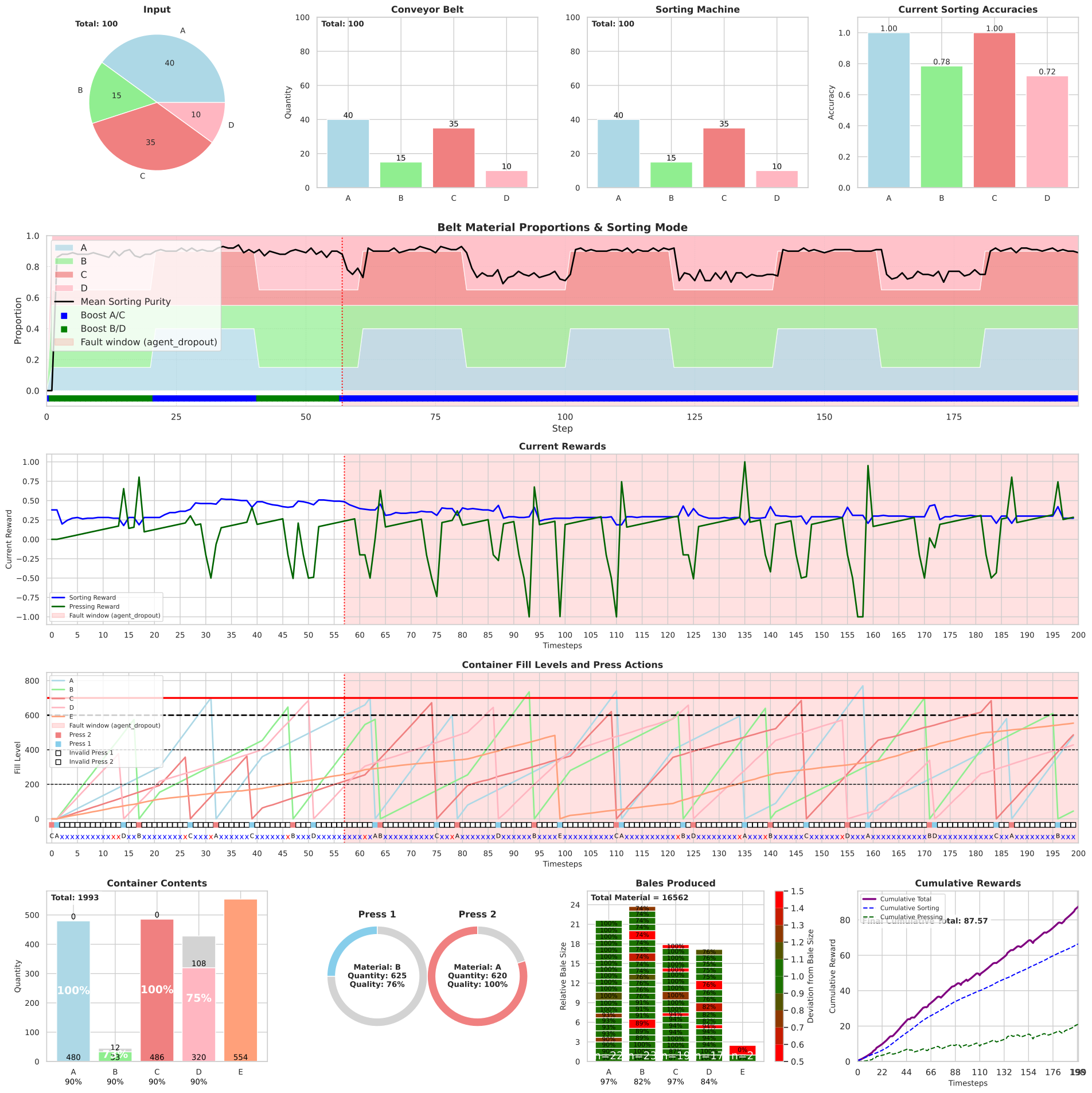
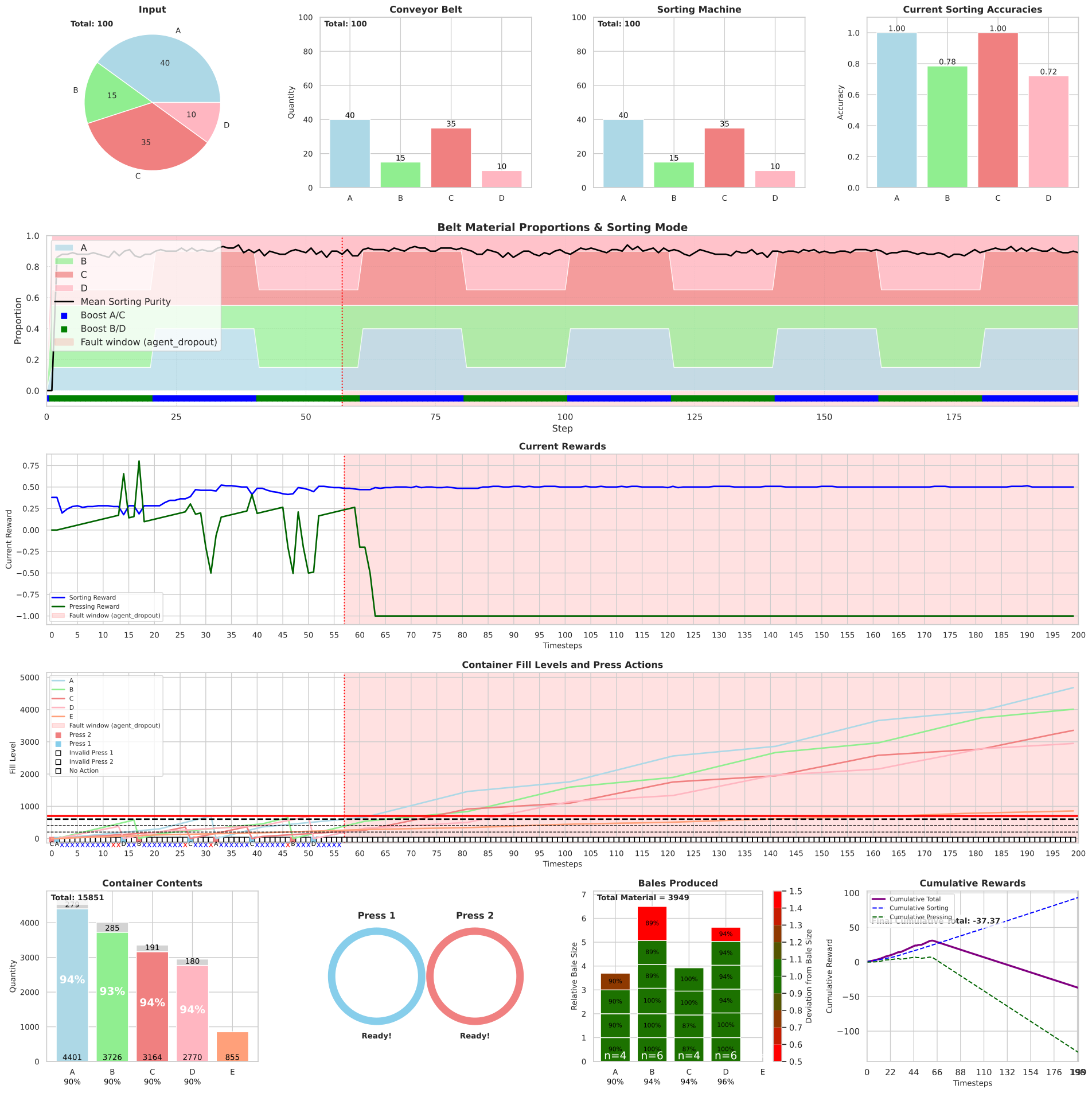
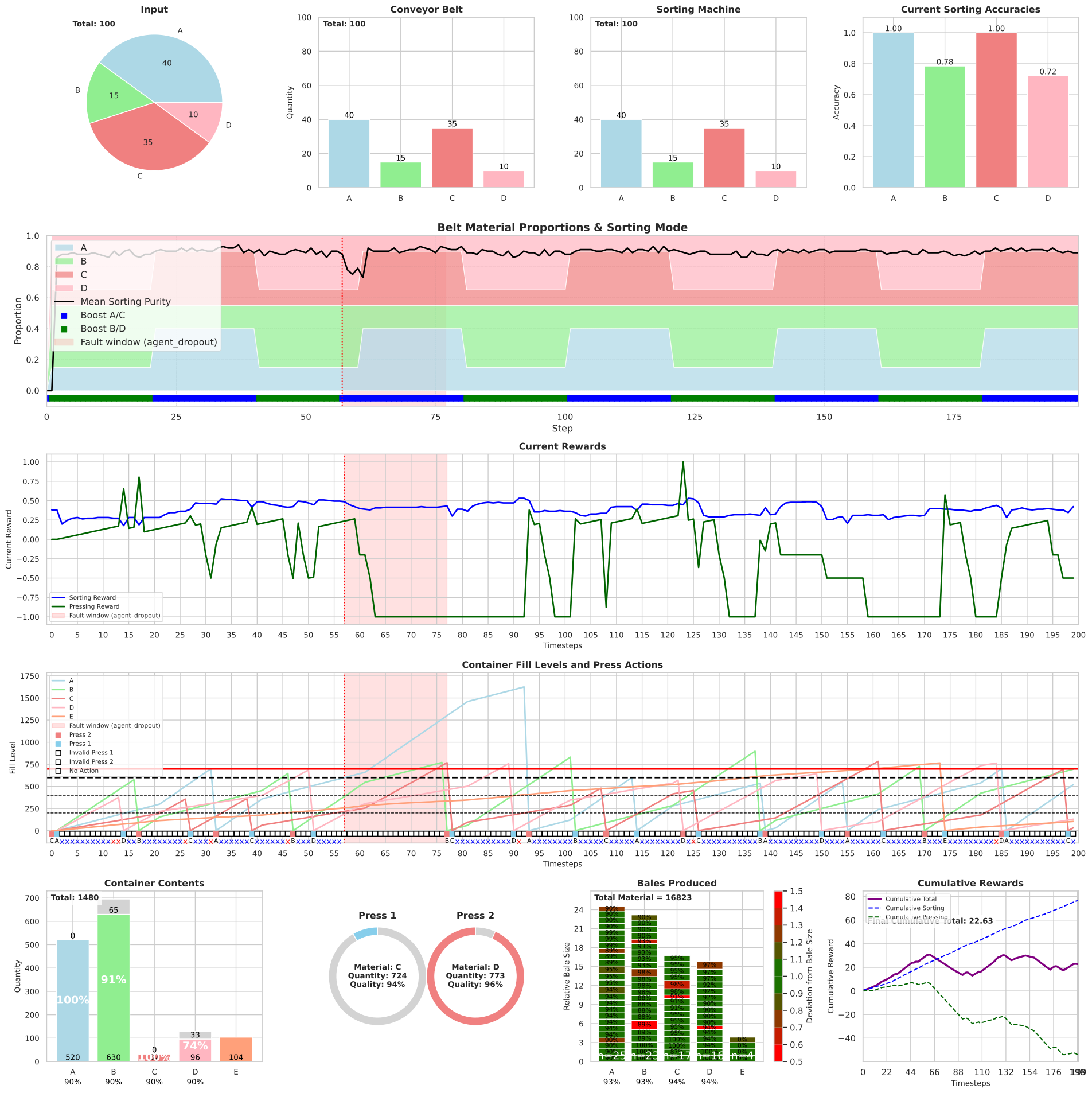
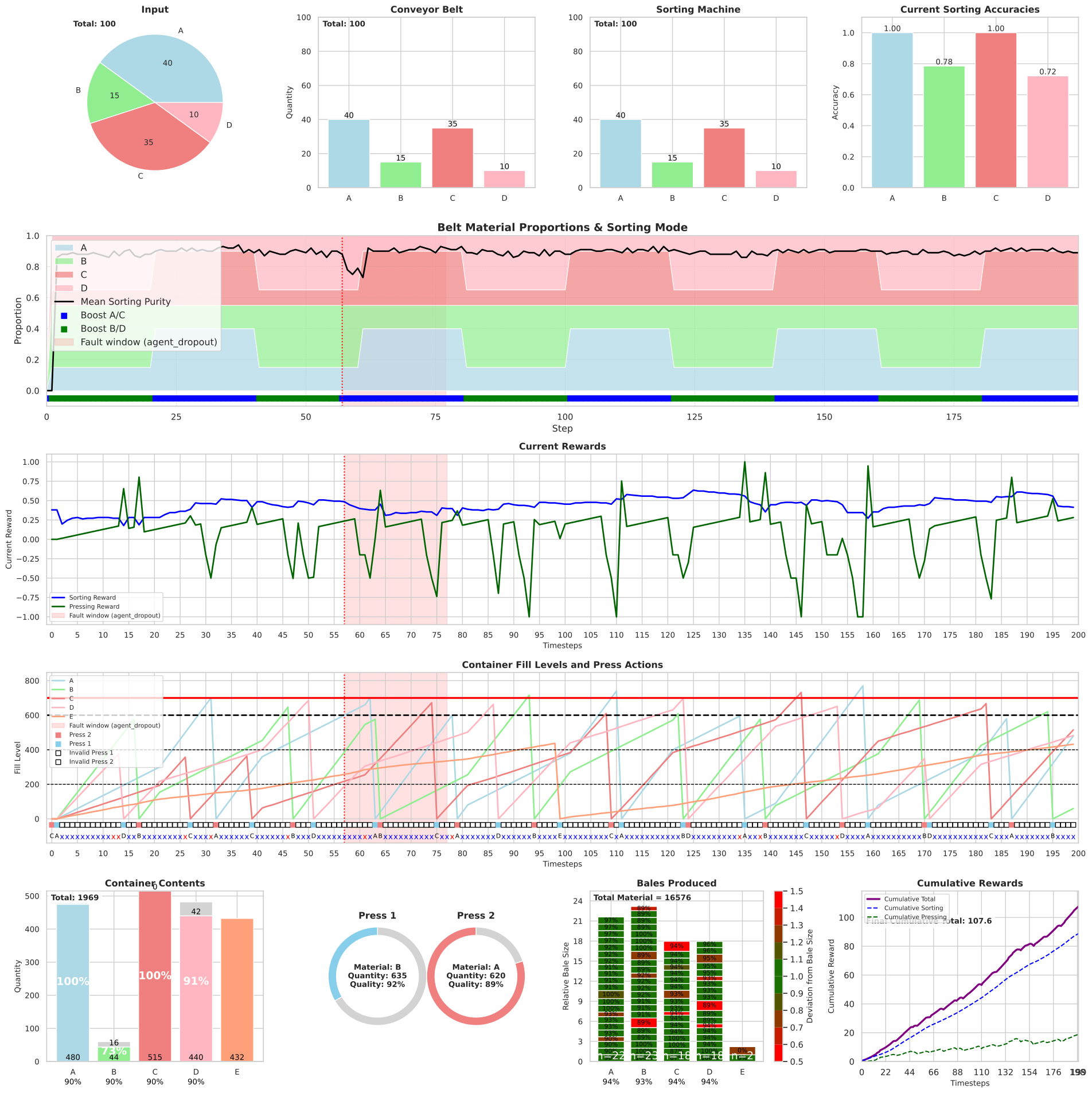
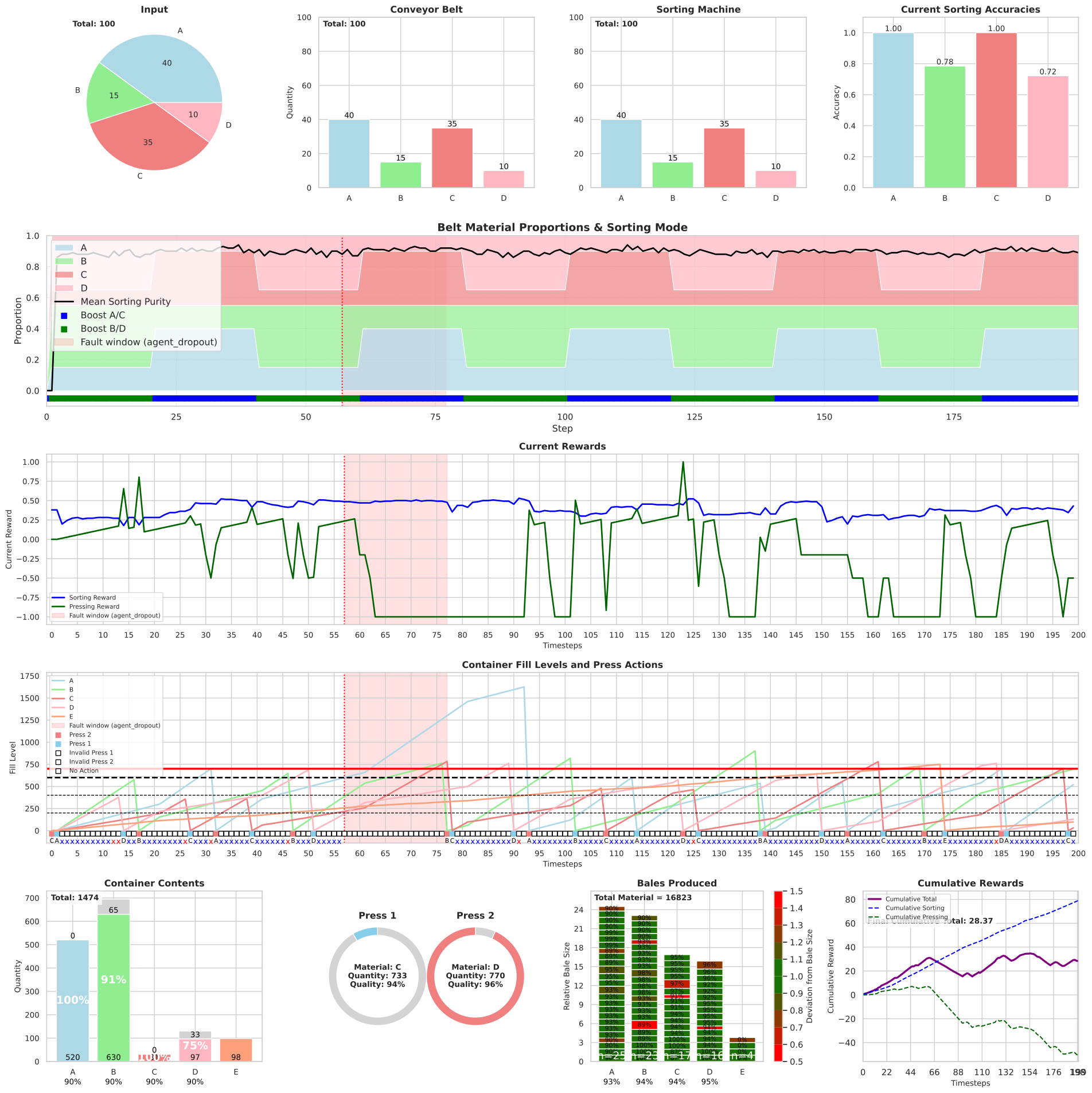
Agent dropout models complete hardware node crashes, power outages, or physical failures by instantly zeroing out a target agent's participation in the multi-agent system (randomized onset between steps 40-60). The failed agent's policy is no longer consulted at all; a fixed failsafe action is applied in its place every step (sort mode 0 for the sorter, a no-op for the press). The remaining agent keeps running its own policy, and the system has to avoid overflow without the dropped agent's decisions.
Experimental trajectory graphs
Permanent fault mode
Agent dropout, permanent fault mode, both agents target - evaluation trajectory with no recovery mechanism active (fault onset randomized between steps 40-60), seed 0 of the 8-seed sweep.Agent dropout, permanent fault mode, sorting agent target - evaluation trajectory with no recovery mechanism active (fault onset randomized between steps 40-60), seed 0 of the 8-seed sweep.Agent dropout, permanent fault mode, pressing agent target - evaluation trajectory with no recovery mechanism active (fault onset randomized between steps 40-60), seed 0 of the 8-seed sweep.
Transient fault mode (20 steps, onset between steps 40-60)
Agent dropout, transient fault mode, both agents target - evaluation trajectory with no recovery mechanism active (fault onset randomized between steps 40-60), seed 0 of the 8-seed sweep.Agent dropout, transient fault mode, sorting agent target - evaluation trajectory with no recovery mechanism active (fault onset randomized between steps 40-60), seed 0 of the 8-seed sweep.Agent dropout, transient fault mode, pressing agent target - evaluation trajectory with no recovery mechanism active (fault onset randomized between steps 40-60), seed 0 of the 8-seed sweep.
Duration modes
Permanent: the fault persists until the end of the episode.